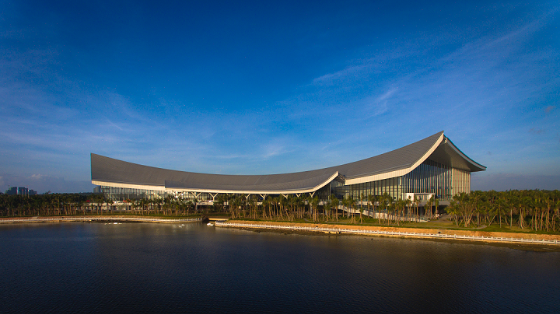
An exterior view of the China (Hainan) Museum of the South China Sea. Photo: courtesy of the China (Hainan) Museum of the South China Sea
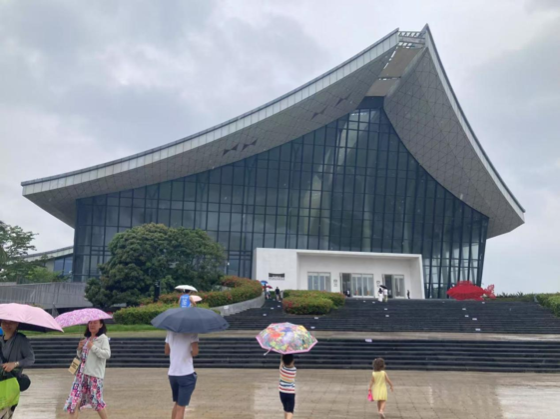
Exterior view of the China (Hainan) Museum of the South China Sea. Photo: Eva Molaro
On
a rainy Sunday in May, with Haikou’s skies heavy and grey and my
children seeking entertainment, I found myself pulled not toward
playgrounds, the beaches or coconut groves, but into something
quieter, more introspective: the China (Hainan) Museum of the South
China Sea. Tucked into the coastline of Tanmen Town, Qionghai, this
national-level museum is not just a building full of relics, it’s a
deep dive into the maritime soul of China’s southern frontier.
Before going, I had become aware of an archaeological exhibition of
relics from Italy’s southern seas, and as someone passionate about
archaeology, cultural heritage and storytelling, I felt compelled to
go and take advantage of this rare opportunity to bring my children
to witness with their own eyes their Italian cultural roots and the
heritage of their new home, Hainan. Indeed, museums are more than
repositories of objects, they’re anchors of identity, allowing
visitors to trace back their own personal history through the shared
heritage of their people.
Exploring
the exhibits
Walking
into the museum, the first thing I noticed was the sound, or rather,
the lack of it. Despite the rain tapping insistently on the
double-sloped roof and the number of visitors, the galleries inside
were silent, offering a peaceful haven. Designed by renowned
architect He Jingtang(何镜堂),
the building feels like it was conceived with the sea in mind: open
corridors offer glimpses of the coast, and natural light gently
filters through skylights and overhangs, even on gloomy days. The
structure reminds visitors of a ship at sea, while the open spaces
and staggeringly high ceilings make for an imposing sight and an
easy-to-navigate space, where exhibition halls are clearly numbered
and visible, for the convenience of all visitors.
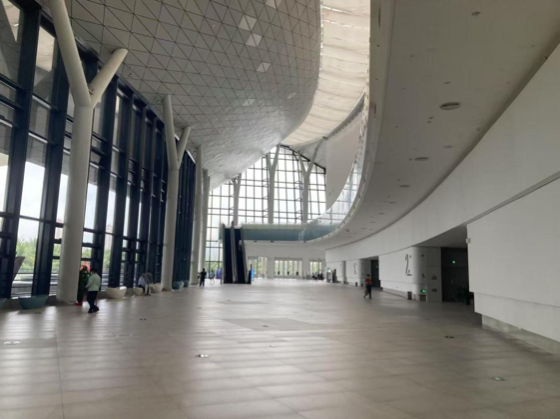
Interior view of the museum’s southern building. Photo: Eva Molaro
The
exhibitions are thoughtfully arranged across nine halls, however the
museum is home to a total of 53 different exhibition spaces
distributed across over 70,000 square meters. It features two
exhibition zones, with the southern zone housing eight indoor
showrooms and one open-air showroom, and the northern zone
highlighting the museum's social functions. The museum houses over
70,000 pieces, including antiques, biological samples, and ship
models, and is equipped with high-tech facilities for conservation
and research. The Natural Ecology Hall brought the underwater world
alive with life-sized models of whales, digital and interactive
displays that allow visitors to listen to the sound of all different
cetacean species and stunning preserved specimens of these giant sea
mammals that fascinated my children. Personally, I particularly
appreciated the display dedicated to saving and taking care of
beached whales. Meanwhile, in the Humanities and History Hall, I
lingered in front of ancient maps and handwritten maritime logs, as
well as stunning Ming and Qing Dynasty ceramics, proof of centuries
of exploration and trade, wondering how exciting it must have been to
discover these treasures underwater. The museum offer so many
valuable pieces, exhibitions and exciting high-tech and immersive
displays that span 800 years of history and more, that it is
impossible to include all in one brief presentation; and yet, even
amid all this local history, one more exhibition reached across
continents to stir the visitors’ imagination and my deeply rooted
love for archaeology—the special exhibition titled "Echoes
from the Sea: Treasures from Apulia, Italy".
Echoes from Apulia: a special exhibition
On
the second floor of the northern building, in exhibition hall N. 8,
my family and I immersed ourselves in the ancient Greek and Roman
mythology of the Mediterranean, a very familiar environment for me,
but a first for my children. Organized in partnership with Italian
institutions, the Apulia archaeological exhibition is a jewel in the
museum’s 2025 program titled Archaeology tells of Apulia: Between
the Two Seas. As I walked through its rooms, I was immediately
transported back to my high school studies, trying to decipher and
translate the ancient writings and painted pottery for my children.
The 4000 to 1700 year-old amphoras, ara, kylix, denari coins, plaster
casts, columns and even tiny oil lamps are decorated with
mythological creatures and legends that, to an expert eye, offer a
visual and thematic dialogue between two maritime cultures, the
Mediterranean and the South-China Sea ones, both shaped by the sea,
both cradles of trade, myth, and migration.
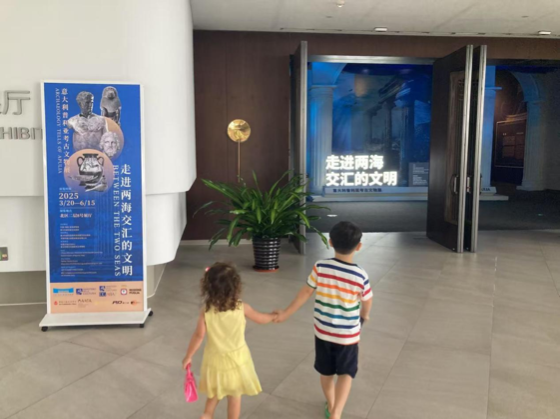
Children
enter Exhibition Hall N.8 in the China (Hainan) Museum of the South
China Sea, in Qionghai, Hainan. Photo: Eva Molaro
The
exhibit features over 230 artifacts from the Apulia region in
southern Italy, spanning the Neolithic, Classical, and Roman eras. On
display were bronze figurines, elaborately painted ceramics, and
intricately carved stone reliefs.
Some of my favourite
pieces on display were the head of Neptune, silver coins depicting
the legendary figure of Taras riding a dolphin, an ancient Egyptian
statuette depicting the God of wisdom Thoth and various red ceramic
containers depicting gorgons, Heracles (Hercules) fighting centaurs,
hippogriffs, chimeras, Pegasus and sphinxes. What made this
exhibition truly special was juxtaposition of Apulian artifacts and
Chinese maritime tradition, as well as a comparison between the
mythology of the two cultures, which made me feel a deep sense of
global continuity. In one corner of the gallery, children can also
enjoy an interactive display, try and engage with puzzles to piece
together some of the ancient vases they have just observed in the
exhibition and buy some wooden boat models and other
exhibition-themed memorabilia.
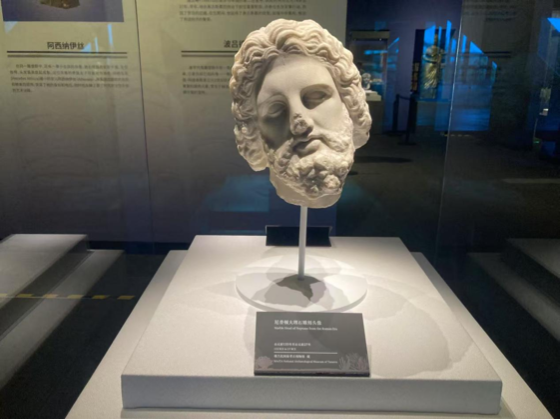
Marble head of Neptune from the Roman Era, on display at the China (Hainan) Museum of the South China Sea, in Qionghai, Hainan.
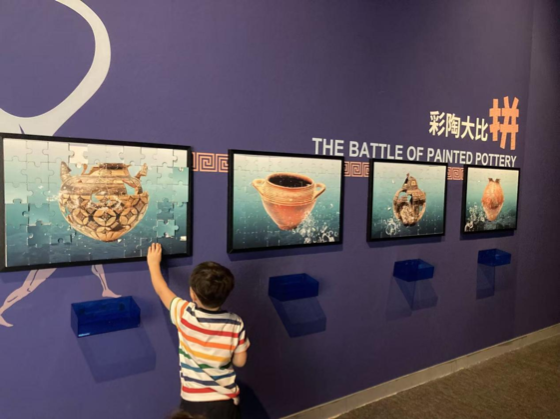
Interactive puzzle wall at the exhibition Archaeology Tells of Apulia, at the China (Hainan) Museum of the South China Sea, in Qionghai, Hainan.
Cultural tourism opening up
As
China’s southernmost province continues to develop its identity as
a free trade port and cultural destination, institutions like this
museum become increasingly essential. They help frame the island not
just as a beach paradise, but as a place with deep roots and wide
horizons. From its exhibitions on traditional Hainanese fishing
techniques to the immersive hall dedicated to the culture of local
boat builders, the museum celebrates authentic history and heritage.
One particularly touching installation featured oral histories of
elderly fishermen, their voices recorded in Hainanese dialect,
recalling rituals for setting out to sea. What impressed me most was
how the museum integrates these local elements into broader
narratives. The Apulia exhibition is just one example. There’s a
palpable commitment to opening up and connecting Hainan’s story
with that of the wider world.
Of course, it helps that the
museum sits in a region already rich in appeal. Just a short drive
away are the seaside stalls of Tanmen, where fresh seafood steams
beside handwoven fishing nets. Meanwhile, the Boao Forum site—China’s
answer to Davos—is not far either. Every year visitors from all
around the world fly to Boao to marvel at local achievements and
connect with Chinese and international businesses. For
businessman, families and travelers seeking to better understand the
local culture and to enjoy a blend of nature, history, and
contemporary China, this stretch of coastline is becoming
increasingly attractive.
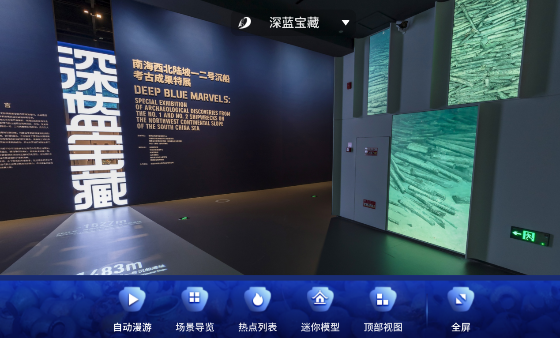
Online digital tour of the China (Hainan) Museum of the South China Sea, provided on the official website of the museum.
Off
the beaten path
As
I stepped back outside, the rain had stopped, the South China Sea
just a short distance away. I stood there for a moment, imagining the
countless voyages—real and metaphorical—that had crossed these
waters. Visiting the China (Hainan) Museum of the South China Sea is
not just about looking at the past; it’s about feeling your place
within it.
For international visitors, this museum offers more
than exhibits. There are multilingual audio guides, detailed English
signage, and often, guided tours available in multiple languages.
Special events are regularly scheduled, especially during cultural
festivals and international celebrations like International Museum
Day. My only regret during this visit to the museum was not checking
the Flying Theatre’s schedule ahead of time. We unfortunately
arrived at the third floor’s immersive motion simulation cinema too
late and were unable to enjoy the 15-minute 5D experience. Still, no
harm done, I am glad to have a good excuse to go back soon to the
museum. On top of that, once at home, I was delighted to find out
that the museum’s official website also offers online virtual tours
of many of the exhibition halls, so if one wants to prepare their
itinerary in advance or simply explore the museum from the comfort of
their home, before heading there in person, the museum gates are just
one click away. Whether you're a history buff, a lover of maritime
stories, or a traveler seeking something different from the usual
tourist trails, this museum delivers.
主办单位:海南省卫生健康委员会 地址:海南省海口市美兰区海府路40号 中文域名:海南省卫生健康委员会.政务
任何建议和意见请联系:hnswshjhsywyh@126.com 技术支持:海南省卫生健康委员会信息中心、海南信息岛技术服务中心
琼ICP备2023011375号-4  琼公网安备 46010802000007号 政府网站标识码:4600000044 邮编:570203
您访问的链接即将离开“海南省卫生健康委员会”门户网站
是否继续?
电脑版|手机版
主办单位:海南省卫生健康委员会
中文域名:海南省卫生健康委员会.政务
任何建议和意见请联系:hnswshjhsywyh@126.com
技术支持:海南信息岛技术服务中心、海南省卫生健康委员会信息中心
地址:海南省海口市美兰区海府路40号 邮编:570203
琼ICP备2023011375号-4 网站标识码 4600000044